"Exploring Stephen Hawking's Vision: The Possibility of Creating Black Holes on Earth"
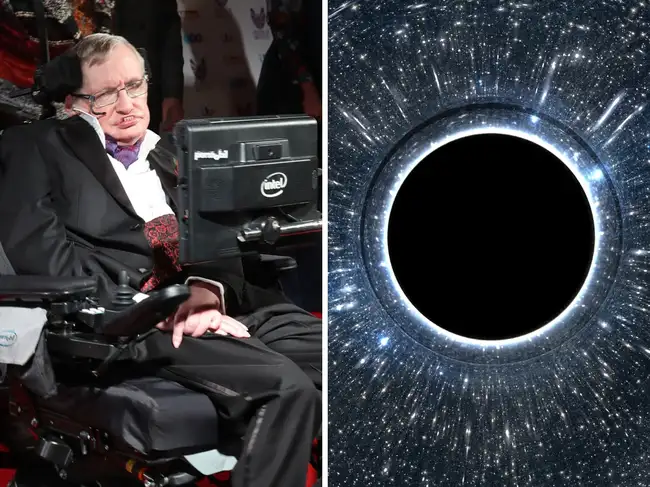
Stephen Hawking, renowned physicist and visionary, once proposed the audacious idea of creating black holes in a controlled environment on Earth.
In this comprehensive article, we delve into the theoretical and practical aspects of Hawking's proposal, exploring the potential feasibility, implications, and ethical considerations surrounding the creation of black holes in a laboratory setting.
I. Stephen Hawking's Vision:
Hawking's Revolutionary Idea:
- Introducing Stephen Hawking's groundbreaking proposal to create microscopic black holes on Earth, challenging our of the universe.
- Highlighting his motivations and the potential scientific breakthroughs such experiments could bring.

Theoretical Foundations:
- Explaining the theoretical framework behind Hawking's hypothesis, including the concept of Hawking radiation and its black hole creation.
- Discussing the role of quantum mechanics and particle physics in supporting this concept.
II. Black Hole Creation: The Science Behind the Idea:
The Physics of Black Holes:
- Providing an overview of black holes, their formation, and their unique properties.
- Exploring the gravitational collapse of massive objects and the conditions necessary for black hole formation.

Microscopic Black Holes:
- Discussing the theoretical possibility of creating microscopic black holes, which are much smaller and less than their cosmic counterparts.
- Examining the potential methods and mechanisms for inducing black hole formation in a controlled laboratory environment.
III. Feasibility and Experimental Considerations:
Collider Experiments:
- Exploring the potential role of particle accelerators, such as the Large Hadron Collider (LHC), in creating conditions conducive to black hole formation.
- Discussing the technical and safety precautions associated with such experiments.
High-Energy Cosmic Rays:
- Investigating the possibility of using high-energy cosmic rays as natural "cosmic colliders" to trigger black hole creation.
- Examining the feasibility and limitations of harnessing these cosmic events for experimental purposes.
:format(webp):no_upscale()/cdn.vox-cdn.com/uploads/chorus_asset/file/18314550/cosmic_rays_atmosphere.jpg)
IV. Implications and Consequences:
Probing the Laws of Physics:
- Discussing how black hole creation experiments could shed light on fundamental physics, including the and the unification of quantum mechanics and general relativity.
- Highlighting the potential discoveries that could reshape our understanding of the universe.
Technological and Practical Applications:
- Exploring the potential technological advancements and spin-offs that could arise from research related to black hole creation.
- Discussing the broader impact on various scientific disciplines.
V. Ethical Considerations and Safety Precautions:
Assessing Potential Risks:
- Addressing concerns related to the safety and created black holes, including their potential for growth and unintended consequences.
- Discussing the rigorous safety protocols and risk assessments necessary to mitigate potential hazards.

Responsible Research and Oversight:
- Emphasizing the importance of ethical oversight, regulatory frameworks, and international collaboration in guiding research black hole creation.
- Exploring the necessity of and transparent communication to address concerns and foster informed discussions.
Conclusion:
Stephen Hawking's visionary proposal to create black holes on Earth represents a bold leap into the unknown realms of physics.
While the feasibility and safety of such experiments remain subjects of intense scrutiny and debate, the potential scientific breakthroughs and associated with this concept continue to drive exploration and inquiry.
As we navigate the uncharted territories of black hole creation, it is imperative with responsible research, robust safety measures, and thoughtful ethical considerations.
Comments
Post a Comment